

Wood pellet heat gives Mother Nature an early start every spring at this Nova Scotia greenhouse
Harsh Maritime winters aren’t friendly to delicate seedlings, but a custom wood pellet heating system installed at Searle’s Garden and Florals in Truro, Nova Scotia, ensures plants and vegetables grown throughout the winter will thrive in gardens and homes every spring.
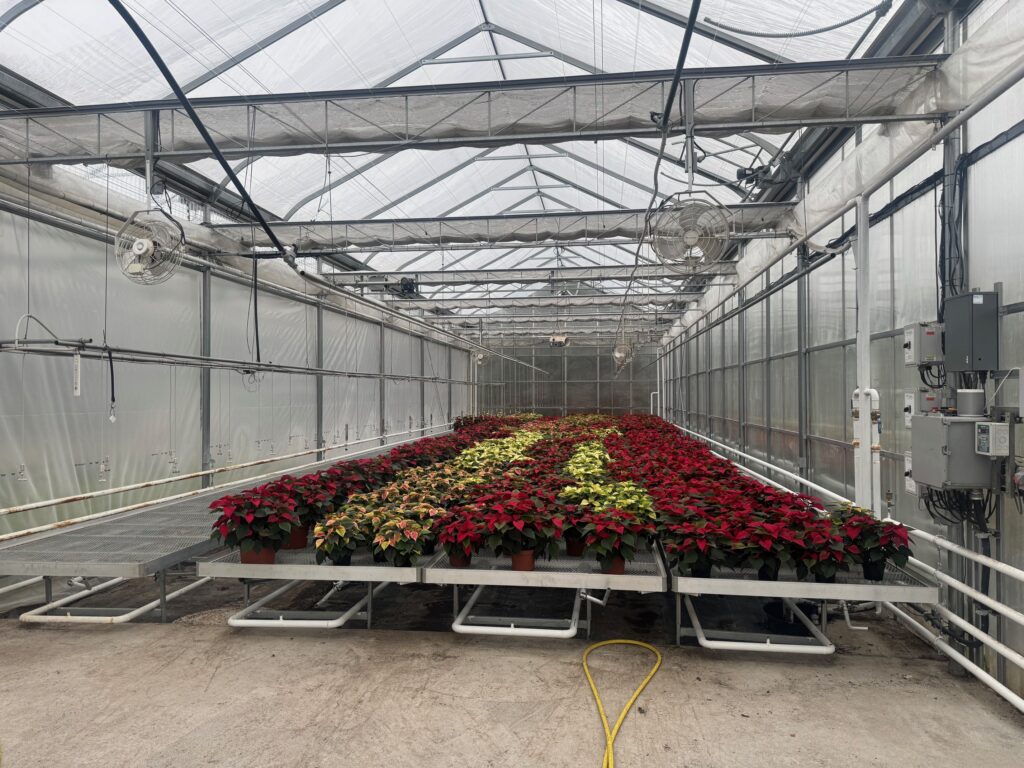
“We do our early germination and propagation in this greenhouse. The pellet boiler gives us under-bench hot water, which is really nice. Forced air from propane can help with humidity and as a backup, but it’s a harsh heat, very uneven,” said Andrew Searle, owner of the large facility. “The plants in here are tender and small. We want the best start for them possible.”
Using wood pellets, produced from sawmill residues, makes sense for Searle. In 2018, the business moved to its present location in Truro, consolidating greenhouses, a garden shop, a flower centre, and landscaping at one location.
Searle wanted an easy-to-maintain, efficient system to heat his new gutter-connected greenhouse from the end of December through early May. After experimenting with wood pellets in his other hoop-style greenhouses, Searle invested in a pellet-fired boiler system.
“We are growing annuals, vegetables and perennial production in pots and packs, hanging baskets and containers,” Searle said. “We have a straight-to-retail operation at this location and wholesale to three other locations. We need a system that is reliable and efficient.”
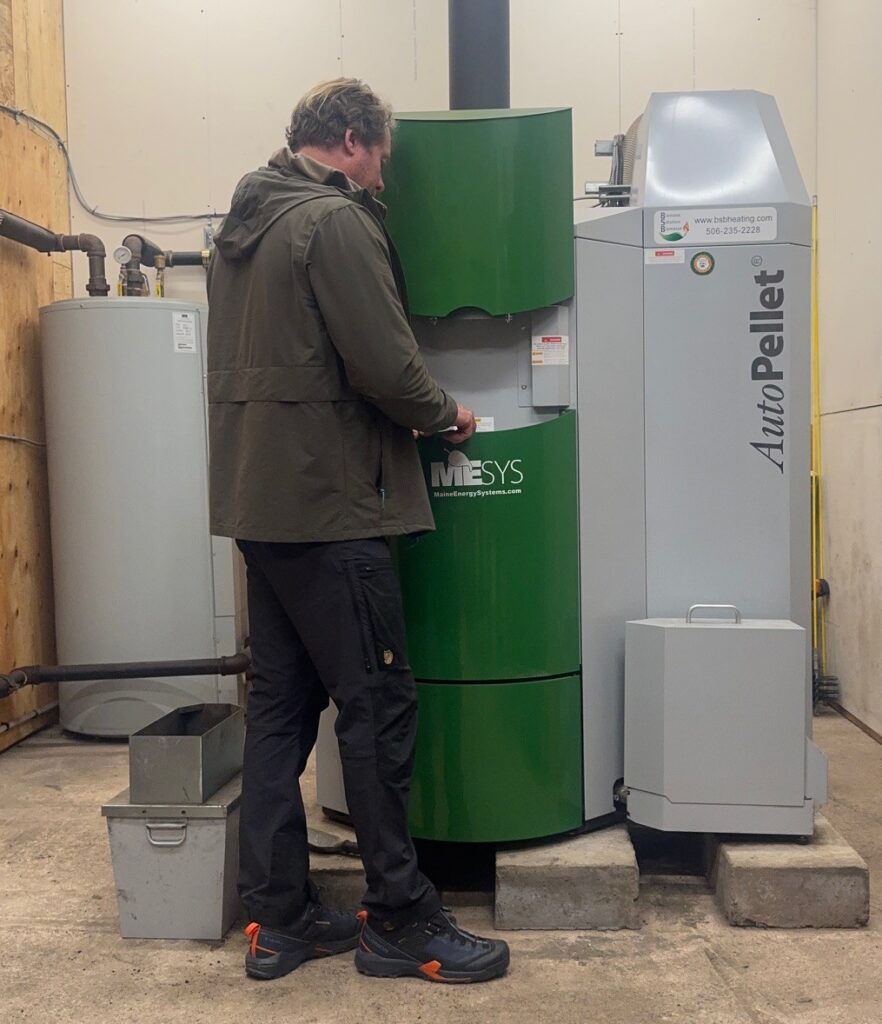
Searle purchased a MESys/ÖkoFEN boiler system supplied and installed by Biomass Solutions Biomass (BSB), a New Brunswick-based company owned by Groupe Savoie and Compact Appliances. Since 2011, BSB has applied their biomass expertise to government, commercial and industrial locations, apartment buildings, garages and private residences. Most of these installations were provided to replace fossil fuels while supporting the growth of the local economy. Theo Losier, BSB Development Agent, worked with Searle to design a system that could be scaled up for additional capacity. The 56 Kw system is designed to accommodate additional boilers for a future building expansion.
Searle used a wood-fired boiler at a previous facility. The system needed an operator to load wood fuel around the clock, constant monitoring and time-consuming maintenance. The MESys/ÖkoFEN’s automation and ease of maintenance save hundreds of staff hours annually. The Wi-Fi system reports any issues to Searle’s phone, and he can often correct minor issues off-site.
The system uses about 30,000 pounds of pellets annually. Searle said the pellet boiler offers significant savings over propane systems.
Nearby Pellet Mill Provides Fuel
The greenhouse operator says a reliable supply of pellets from Shaw Renewables in Hardwood Lands, a half hour from his operation, is a big advantage. Chris Blanchard, Shaw’s Director of Operations for Renewables, said wood pellet heating using locally-sourced pellets is less expensive and more eco-friendly than fossil fuels.
“For Searle’s greenhouse, that means transporting pellets less than 50 kilometres from our plant to their business. It’s an efficient, cost-effective way to heat their facility,” Blanchard said.
Losier said wood pellet boilers are an excellent fit for greenhouse operations needing a constant, reliable source of heat to help plants thrive in a short Canadian growing season.
“It’s a constant heat; it provides an ideal system for growing vegetables and flowers. Greenhouse operators are also looking for a low-carbon way to heat their operations, and sustainably produced pellets are an excellent alternative,” Losier said.
BSB has installed other wood pellet heating units in Maritime greenhouses, including the Kingsclear Provincial Tree Nursery near Fredericton and the New Brunswick Botanical Gardens in Saint Jacques. With seven pellet mills operating throughout the Maritimes—five in New Brunswick and two in Nova Scotia—Losier expects more greenhouses will utilize efficient, dependable pellet heat in the future.
“Nurseries and greenhouse installations are a promising market for biomass. There are usually no space limitations in a greenhouse application compared to an existing commercial building. There’s no cooling needed, which eliminates other considerations,” he said.