


The 2026 Arctic Bioenergy Summit and Tour brought together over 130 energy leaders, policymakers, and bioenergy experts in Yellowknife, Northwest Territories (NWT), from January 26–28 to explore bioenergy and heating solutions for remote and Arctic communities. The event, hosted by the Arctic Energy Alliance (AEA) and the Wood Pellet Association of Canada (WPAC), showcased the theme Sustainable Bioenergy for Northern Communities: Reliable. Affordable. Local.
“Bringing communities, industry, and governments together sparked exactly the kind of knowledge‑sharing and collaboration needed to advance clean energy in the Arctic,” said Mark Heyck, Executive Director, AEA. “The insights shared over these three days will help accelerate real‑world projects that reduce costs, strengthen local economies and support long‑term sustainability.”
The event opened with a full‑day tour of local biomass installations, including district heating systems, civic buildings and community facilities. Participants saw firsthand how the Northwest Territories, a leader in biomass adoption, uses biomass technologies to improve energy resilience.

The following two-day summit was packed with information, featuring eight sessions covering real-world lessons learned domestically and internationally, combined heat and power (CHP) and district heating solutions, and the benefits to communities. There was a lot of engagement with great discussions. Here is a taste of what was covered.
Advancing Bioenergy in Northern Communities
Participants learned how northern communities are leading in renewable heat through proven, operational biomass systems. They gained an understanding of global and Canadian bioenergy pathways, including why technologies such as bioheat, combined heat and power (CHP), and district energy are particularly effective in cold, remote regions. They heard how the Government of the Northwest Territories (GNWT) plans for and integrates biomass into public infrastructure—along with the real-world challenges and lessons of northern implementation. Finally, participants heard how Wekweètì is advancing its wood‑chip district heating network, offering a practical example of community-driven innovation.
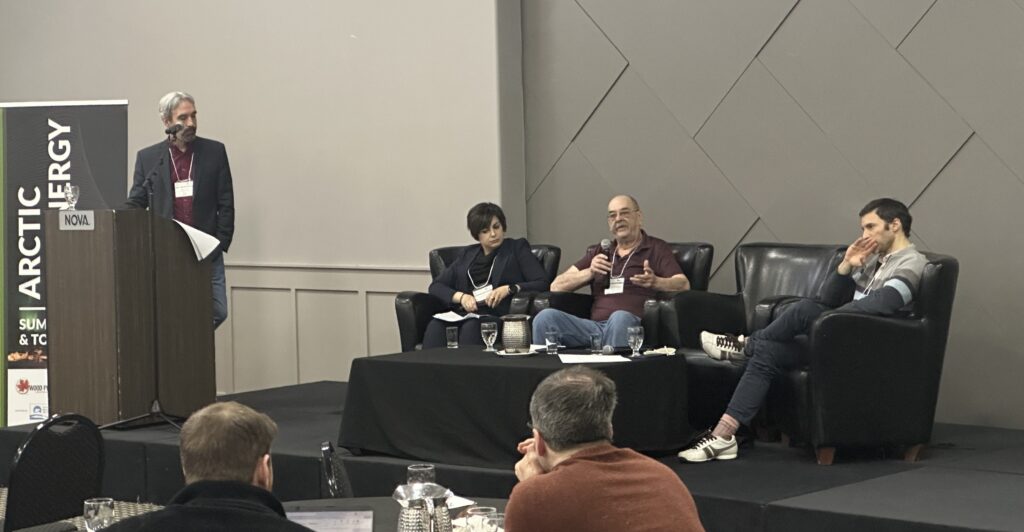
Practical Biomass Solutions
Participants learned how real‑world bioenergy projects are being successfully implemented across the North and what makes them work. They heard from J&R Mechanical about common design pitfalls, installation challenges, and practical troubleshooting lessons gained from commissioning biomass systems in remote communities. The GNWT’s Housing NWT program spoke about the Sissons Court district heating project—including why biomass was selected, the factors that drove its success, and unexpected obstacles that emerged along the way. The session also highlighted Teslin’s community‑led approach, showing how strong Indigenous leadership, early engagement, and local capacity building create economic, social and energy‑security benefits that extend beyond reduced fuel costs.
Logistical Realities Delivering Bioenergy to the North
Participants learned how supply chain realities shape the success of northern bioenergy projects. They gained practical insight into how different biomass fuels—firewood, chips and pellets—affect storage, transport, system performance and cost. They also heard about the logistical challenges of moving pellets north, including long trucking distances, seasonal access windows and key cost drivers. Research from the University of British Columbia highlighted the importance of better storage infrastructure, optimized transport routes and Indigenous‑led logistics. Finally, participants heard GNWT’s findings on delivering pellets to remote communities and what role the government can play in strengthening long‑term supply security.
What Other Regions are Doing
Participants learned how other regions are successfully using biomass and district energy to strengthen energy security and support rural communities. Finland’s experience showed participants how strong policy support and rural economic priorities enable bioenergy to thrive. They also learned from Alaska’s Galena project about the value of community ownership, long‑term maintenance planning and candid lessons from real‑world operations. The session concluded with a look at district heating as essential Arctic infrastructure, highlighting its role in resilience, adaptability and growing pellet demand.
Strengthening Energy Security and Resilience with CHP and District Heating
Participants learned how CHP and district heating systems can strengthen energy security and resilience in northern communities. The session outlined what makes community‑wide heat networks viable in Arctic conditions and what is required to scale them from pilot projects to full systems. Participants also gained practical insights from operational experience with bioenergy systems, including maintenance realities and lessons from cold‑climate district energy projects. The session concluded with an update on small‑scale biomass CHP technologies being tested across Canada and what these advancements mean for remote and rural communities.
Panel Session – Community Benefits and Co‑Benefits
Participants learned how bioenergy projects create broad community benefits beyond energy production. The panel spoke about how local leadership and engagement strengthen project success, how biomass systems can reduce operating costs for homes and businesses and how these projects stimulate local employment and economic activity. Participants also heard how bioenergy supports community pride, improves environmental health and helps build capacity through training and partnerships. The session showed that bioenergy can deliver meaningful economic, social and environmental advantages for northern and remote communities.
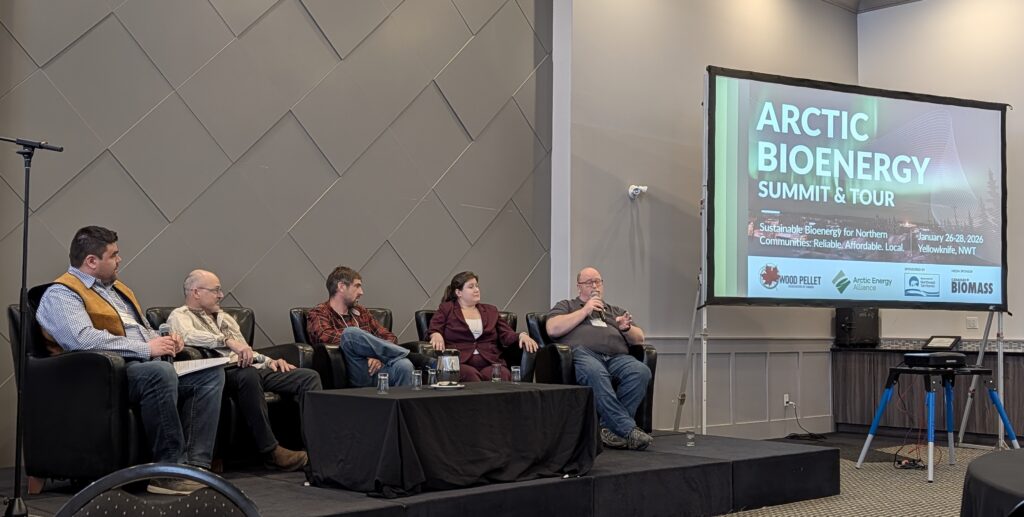
Practical Skills and Support
Participants learned the practical skills needed to plan, fund and operate bioenergy systems in northern and remote communities. The session covered how to access funding and build local capacity, how to conduct effective feasibility assessments and the real‑world challenges that shape project outcomes in remote settings. Participants also gained insights into how community leadership, hands‑on training, and long‑term operational support contribute to successful, community‑driven clean‑energy projects.
Forests, Carbon and Bioenergy
Participants learned how sustainable forestry and bioenergy can work together to strengthen climate resilience in the North. The session showed how biomass can reduce diesel use, lower black‑carbon emissions and help offset carbon losses from wildfires. Participants heard how FireSmart practices can reduce wildfire risk while creating a reliable local biomass supply for remote and Indigenous communities. Overall, the session highlighted how combining forest management with bioenergy systems can cut emissions, improve community safety and support healthier northern landscapes.
“This Summit showed just how far northern communities have come in adopting practical, reliable bioenergy solutions,” said Fahimeh Yazdan Panah, Association Executive Director, WPAC. “Seeing these systems in action—and hearing directly from the people operating them—underscores the pivotal role biomass can play in building energy resilience across the North.”
The presentations are available for viewing at pellet.org. AEA and WPAC are planning to hold the event again in 2028.
Gordon Murray is the Executive Director of the Wood Pellet Association of Canada.