

Every year brings its mix of challenges and opportunities for Canada’s wood pellet sector. What determines our momentum is not the circumstances we face, but whether we continue to show up, work together, and move the file forward. Looking back at 2025, progress across markets, safety, research and policy reflected consistent, collective effort—not individual achievement.
International Initiatives
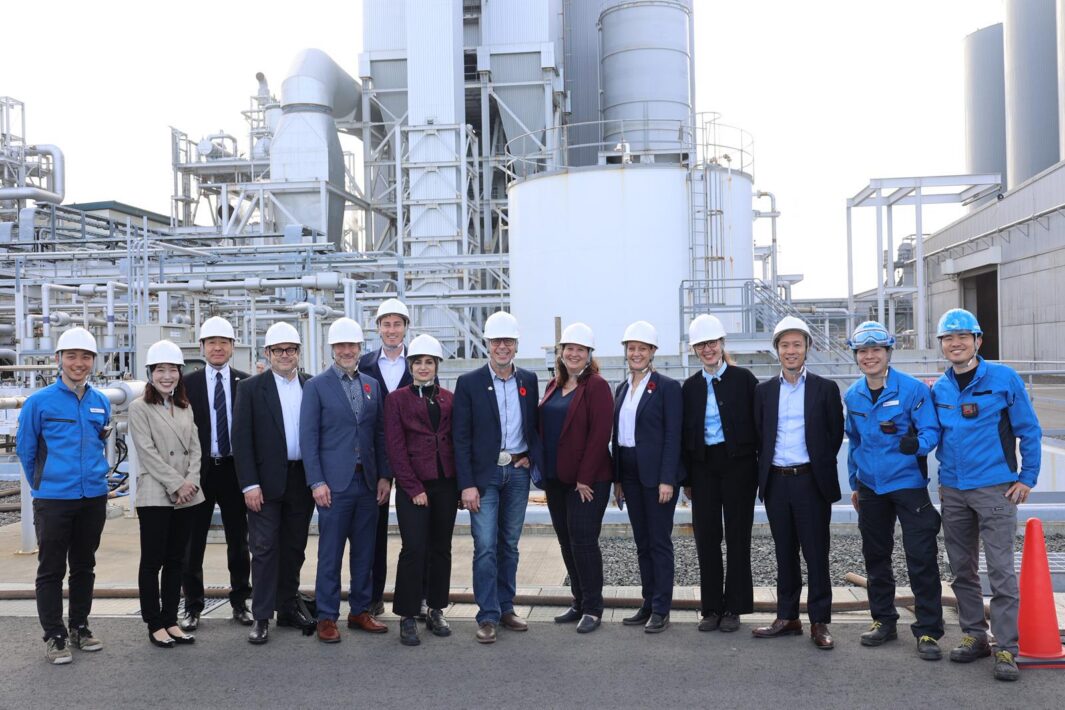
The 2025–26 WPAC Business Plan identifies Japan as a top priority, and the year’s activities reflected that direction. One of the clearest examples of our progress, and a fitting image for this column, comes from our 2025 mission to Japan. The photograph included here shows WPAC representatives alongside senior officials from Alberta’s Ministry of Forestry and Parks, including Minister Todd Loewen and Deputy Minister Ronda Goulden, together with Japanese utility partners at the Omaezaki Biomass Power Station. It captures a simple truth about this past year: progress happens when we build and maintain real relationships. Japan remains one of the most important long-term markets for Canadian pellets, and in 2025, we reinforced that relationship at every level.
Throughout the year, our team had multiple touchpoints with Japanese stakeholders: outreach and meetings in May, participation in ISO/TC 238 working groups and workshops in Tokyo in October, and the joint mission to Japan with Alberta and British Columbia in November. These engagements helped reinforce Canada’s position as a reliable, sustainable pellet supplier at a time when Japan is placing greater emphasis on biomass sustainability requirements.
Our international efforts extended to Europe as well. WPAC supported a joint safety workshop in Copenhagen with FutureMetrics and Ørsted, continued our involvement in Renewable Energy Directive (RED III) and European Union Deforestation Regulation (EUDR) discussions, and maintained our seat on the European Pellet Council. These activities help ensure Canadian producers remain aligned with evolving European standards—something members consistently identify as essential for confidence in long-term market access.
Work Here at Home
Domestically, one of the most significant files of the year was our collaboration with NB Power on the possible conversion of the Belledune Generating Station in New Brunswick from coal to thermally treated pellets. This is a large, first-of-its-kind project in Canada, and its success depends on more than the power-station conversion alone. Much of the capital risk sits upstream with pellet producers, who would need to convert existing facilities to produce black pellets at a commercial scale. Throughout 2025, WPAC and NB Power worked closely to define what a viable supply chain could look like—including fuel requirements, production capacity and the scale of investment required to build and sustain a long-term pellet supply.
This included developing a coordinated message for governments on the project’s economic and clean-power value, outlining the need for federal capital support and risk-sharing tools, and identifying how Investment Tax Credits and federal financing programs could reduce upfront costs enough to make large-scale investment feasible. These are early steps, but they are essential ones. If successful, Belledune would provide a practical blueprint for future coal-to-biomass transitions and create new opportunities for pellet producers in Atlantic Canada and beyond.
Safety: A Steady Drum
Safety continued to move forward as well. The Rotary Drum Dryer Working Group completed its work; Process Safety Management implementation advanced; and attention to mental health and musculoskeletal injury prevention grew. The WPAC Safety Committee continued to engage the industry through articles, webinars and the Safety Hero program. These efforts rarely make headlines, but they remain foundational to our long-term credibility and performance.
Connection to Broader Forest Economy
The year also underscored how closely our sector is tied to the broader forest economy. Fibre availability remained a major challenge in British Columbia, shaping the operating realities for sawmills, pellet producers and transportation partners. WPAC continued to communicate these pressures through updates and field tours with First Nations partners. The Business Plan reflects this ongoing need to articulate upstream constraints and their impacts across the supply chain.
Research Contributions
Our research efforts also continued, though at a measured pace. WPAC worked with the University of British Columbia’s Biomass and Bioenergy Research Group on early-stage exploration of near-infrared spectroscopy as a potential tool to support pellet quality. In 2025, most of our effort focused on preparing and submitting several funding applications to advance this work, along with hosting a webinar to share preliminary insights with members. Progress was incremental, but these steps helped maintain technical awareness and position the sector for future research when external funding becomes available.
Shared Commitment
Across markets, safety, research, advocacy and communication, the theme is consistent: progress depends on collective commitment. WPAC’s ability to support the sector comes from member engagement, shared priorities and the understanding that a coordinated industry voice is essential.
As we enter 2026, I’m grateful for the confidence members continue to place in WPAC and for the trust that allows us to carry out this work on their behalf. This is not an easy moment for the forest sector, but the steadiness shown in 2025 demonstrates that practical, focused effort can still deliver meaningful results.
If you’re already a member, thank you. If you’re watching the sector from the outside, I encourage you to join us. Membership support is vital to sustaining this work, and we remain open to producers, suppliers and all those who benefit from a strong and prosperous Canadian wood pellet sector.
Gordon Murray is the Executive Director of the Wood Pellet Association of Canada.