

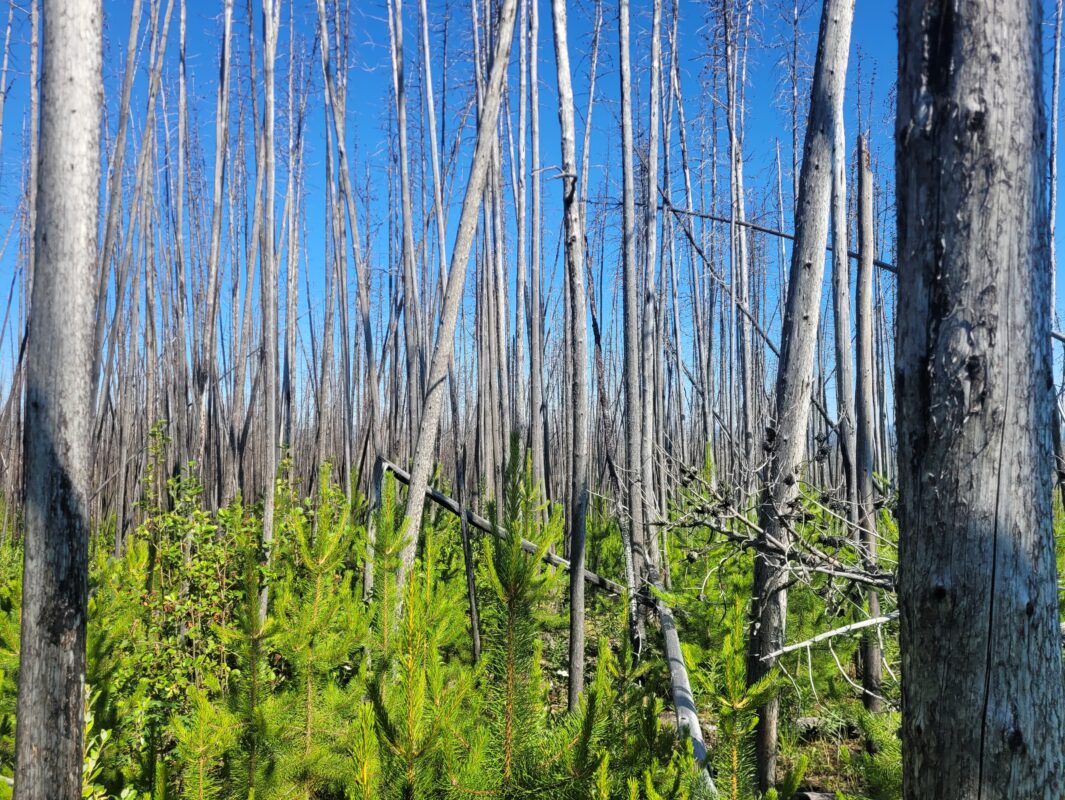
Regeneration is central to Canada’s approach to sustainable forest management, and it’s especially critical in landscapes affected by wildfire. In recent years, British Columbia has faced fire seasons of unprecedented scale, leaving behind vast areas of dead and damaged timber that threaten both regenerating seedlings and long-term forest resilience. In the province’s central interior, Central Chilcotin Rehabilitation Ltd. (CCR)—an Indigenous-owned company focused on forest rehabilitation and enhanced fibre utilization—is showing how responsible salvage can turn these challenging landscapes into healthier forests and renewable energy opportunities.

CCR first developed its approach after the 2017 Elephant Hill fire, using pilot-scale projects to understand how fire-damaged stands could be recovered. Those early lessons now guide CCR’s long-term project near Palmer Lake, within the area burned by the Plateau Complex fire, which consumed more than 540,000 hectares. Through detailed planning, mapping, and protection of sensitive areas, CCR salvages small, heavily charred trees and converts them into fibre for the pulp and pellet sectors—turning material once considered waste into products that support a low-carbon economy.
The benefits reach well beyond fibre recovery. Removing dead, densely packed stems reduces the potential for reburns and protects regenerating seedlings, helping new forests establish more quickly and capture more carbon over time. At the same time, the work supports local employment and provides renewable material to an industry committed to lowering global emissions.
Strong partnerships make this possible. CCR’s work is supported by government programs that help offset the high cost of planning, environmental safeguards and access development. Funding from Natural Resources Canada’s Wildfire Resilient Futures Initiative and the Forest Enhancement Society of BC (FESBC) has been central in proving what’s achievable when wildfire recovery, ecosystem restoration, and fibre utilization are approached together.
As Jason Fisher, Executive Director of the Forest Enhancement Society of BC, notes, CCR’s work is helping shape the future of post-wildfire recovery in BC. “Central Chilcotin Rehabilitation Ltd. has shown vision and determination in recovering fibre from damaged forests that would otherwise go to waste, delivering benefits to forests and communities alike. We hope their insights will lead to solutions that can be applied by other visionary organizations across the province to increase fibre utilization, reduce wildfire risk and create healthier, more resilient forests for generations.”
To learn more about wildfire recovery, fibre utilization, and the role of wood pellets in a low-carbon future, read our latest fact sheet.
Gordon Murray is the Executive Director of the Wood Pellet Association of Canada.