

Across British Columbia, mills representing every level of the forest sector, including sawmills, pulp mills and now a pellet plant, are closing or curtailing at an alarming pace. They serve different markets but are part of an integrated system. While global markets and tariffs certainly shape the broader economic landscape, the real driver of today’s challenges is the lack of accessible fibre that every part of the sector depends on.
Fibre supply has fallen more than 40 percent since 2018, leaving BC operating at roughly 60 percent of the sustainable harvest level set by the Province’s independent Chief Forester. This is the deepest sustained under-harvest in BC’s modern history – and further declines in 2025 only point to a worsening situation. In a sector this interconnected, the effects cascade quickly. What happens to primary manufacturers trickles through the whole supply chain: contractors, sawmills, pulp mills, value-added producers, mass-timber facilities—and pellet plants. As these pressures build, rural communities face fewer jobs and weaker local economies, with reduced tax revenues putting added strain on the services British Columbians rely on.
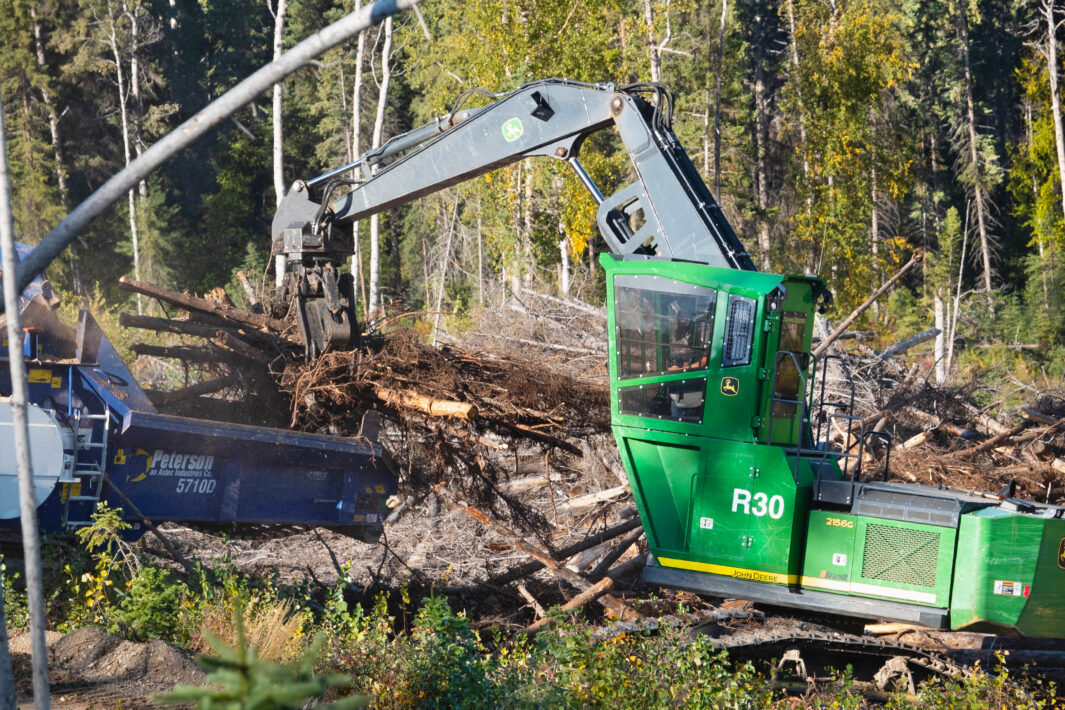
BC pellet producers rely entirely on residuals such as sawdust, shavings, treetops, branches, low-quality logs and, increasingly, fire- or pest-damaged wood that cannot be used elsewhere. By using this material, the pellet sector helps maximize the value of every tree harvested, turning what would otherwise be waste into a renewable biofuel that generates significant export revenue. But when upstream mills shut down, those residuals disappear from the system and pellet producers are left without the material they need to operate.
That is why innovation in fibre recovery is so important. Partnerships involving industry, communities and groups such as the Forest Enhancement Society of BC are helping bring fire-damaged wood back into productive use. These efforts support wildfire recovery, reduce future fire risk and create new economic activity in rural areas. They show what is possible when we work together, but they cannot fully offset the broader decline in accessible primary fibre.
This matters not only for operations here at home but for the markets that count on BC products. As the Province looks to diversify its forest-product exports, stable production is essential; diversification cannot succeed without reliable supply. In Japan, for example, BC pellets are incorporated into long-term climate and energy plans, where consistent supply is critical. That confidence has been built over many years, but it is not guaranteed if instability continues.
A constructive path forward requires immediate, collaborative action to stabilize fibre flow. Alongside sector calls to reduce permit development timelines and address the uncertainty created by overlapping regulatory changes, there is also an opportunity to strengthen mechanisms that support the salvage and recovery of fire-and-pest-damaged wood. Taken together, these steps can help create the stability the sector needs. If industry, government and First Nations act together now, BC can protect its communities, strengthen its markets and maintain its leadership in sustainable forest products.
Gordon Murray is the Executive Director of the Wood Pellet Association of Canada.